ART OF GIFT GIVING
OLD ROOTS REIMAGINED
Tradition is not the past; it’s something we carry forward
MORE THAN JUST GIFTS
This thesis project examines the cultural significance of gift-giving in Chinese traditions, focusing on red envelopes, mooncakes, and tea sets. Drawing on both personal and cultural identity, it explores how these symbolic and historical objects can be reimagined through modern design.
This project aims to appeal to second-generation Canadians with Hong Kong roots, who often balance tradition and modern life. By studying cultural meaning behind gift-giving, Gen Z purchasing habits, and market trends, the project identifies ways to redesign traditional packaging to feel more relevant, accessible, and visually appealing to younger people.
Although the project focuses on the Chinese community, I hope to reach audiences beyond Chinese individuals and to help them appreciate and learn about our traditional gifts. By designing packaging that is modern but respectful of tradition, it encourages more people to discover and appreciate the richness of Chinese gift-giving.
The result is a unified packaging system that blends heritage with modern style. It keeps the meaning of these traditions while offering a new way for people to experience, share, and understand them today.
Scroll To Explore The Journey
RESEARCH QUESTION:
How can traditional Chinese gift-giving and gifts be modernized to better resonate with younger second-generation immigrants from Canada with a Hong Kong background to help maintain their cultural identity?
KEY RESEARCH MILESTONES From Lit Review
〰️
KEY RESEARCH MILESTONES From Lit Review 〰️
Reciprocity & the Meaning Behind Gifts
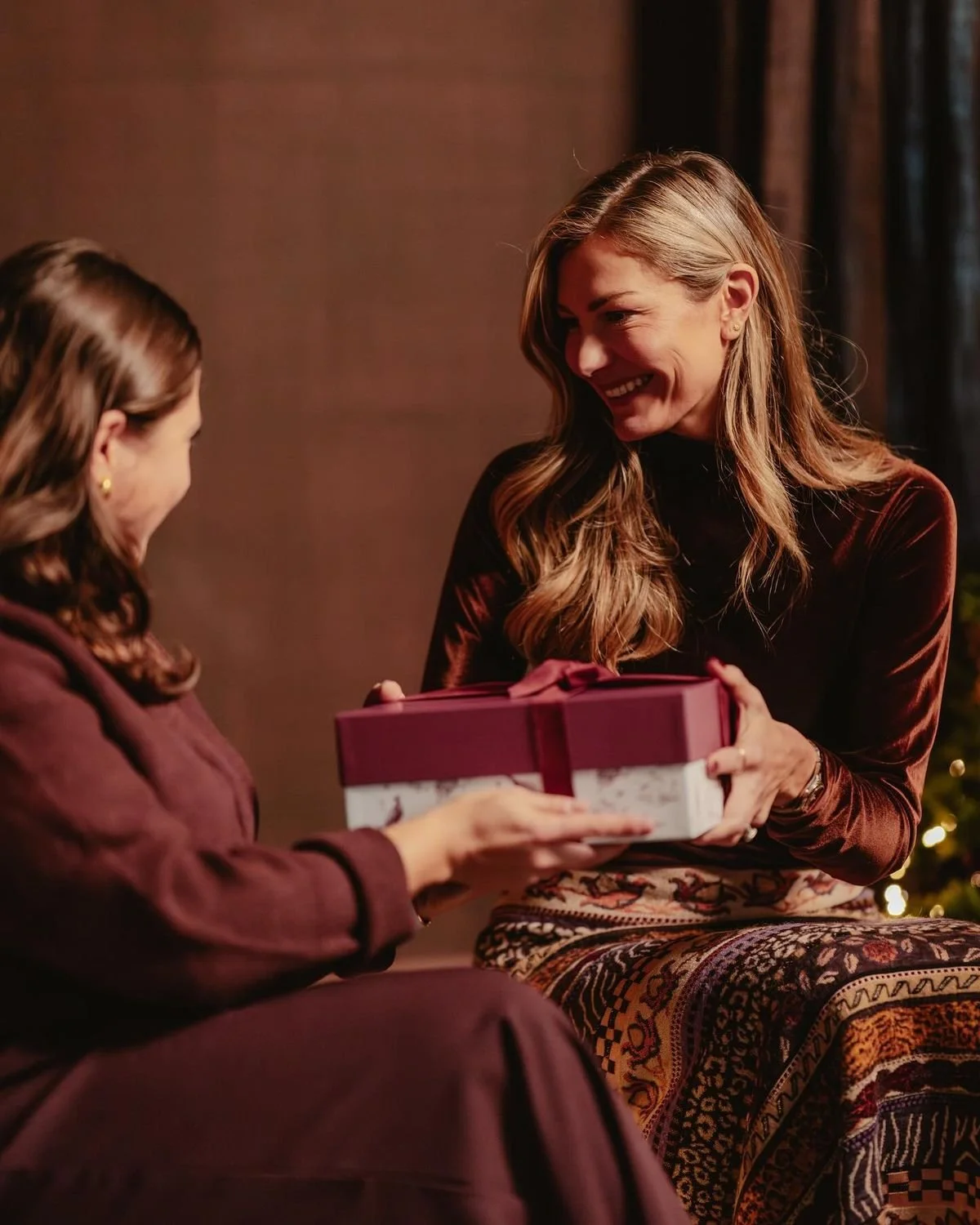
Gift-giving involves a cycle of giving, receiving, and returning
Timing, presentation, and intention all shape relationship dynamics
The act itself is as important as the object
What Sparked My Curiosity
This project comes from my own experience as a second-generation immigrant. As I grew up, I often felt disconnected from traditional practices because they were simplified at home and not always explained in detail. Since my grandparents live far away, I have not had many opportunities to learn about my culture directly from them.
As time went on, gift-giving traditions started to feel more like chores than special moments, especially since they did not always fit with modern life. This made me wonder how these traditions could be changed to feel more meaningful and interesting for younger people.
With this project, I want to close that gap by redesigning traditional cultural gifts to match modern design, technology, and accessibility. My goal is to help people like me reconnect with their cultural roots in a way that feels both meaningful and modern.
Gift-Giving as A Social Connection
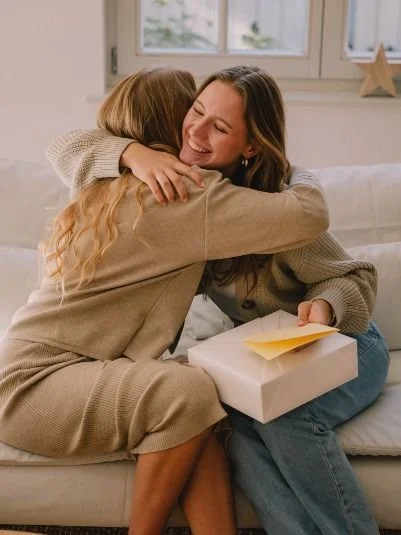
Gift-giving is not transactional, it builds emotional bonds and social relationships
Acts of giving reinforce community, obligation, and care
Gifts act as symbols of identity and relationship strength
Cultural Blending Strengthens Connection
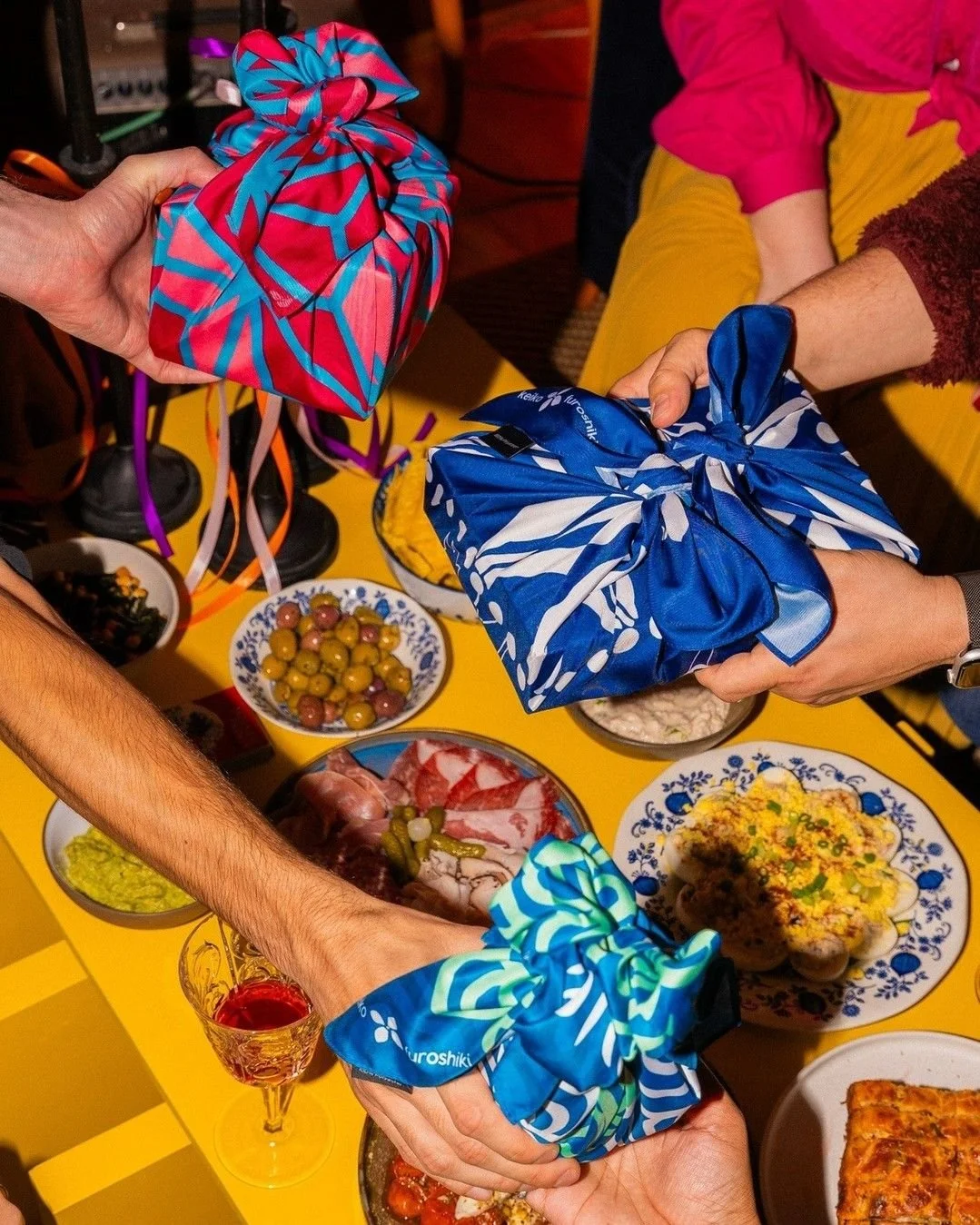
Culturally mixed gifts create a stronger emotional impact
They signal understanding, respect, and shared identity
However, authenticity is key; avoid cultural appropriation at all costs
The Role of Autonomy in Cultural Identity

Second-generation individuals connect more deeply to culture when it is self-discovered, not imposed
Autonomy leads to stronger cultural identification and well-being
Understanding Identity & Belonging
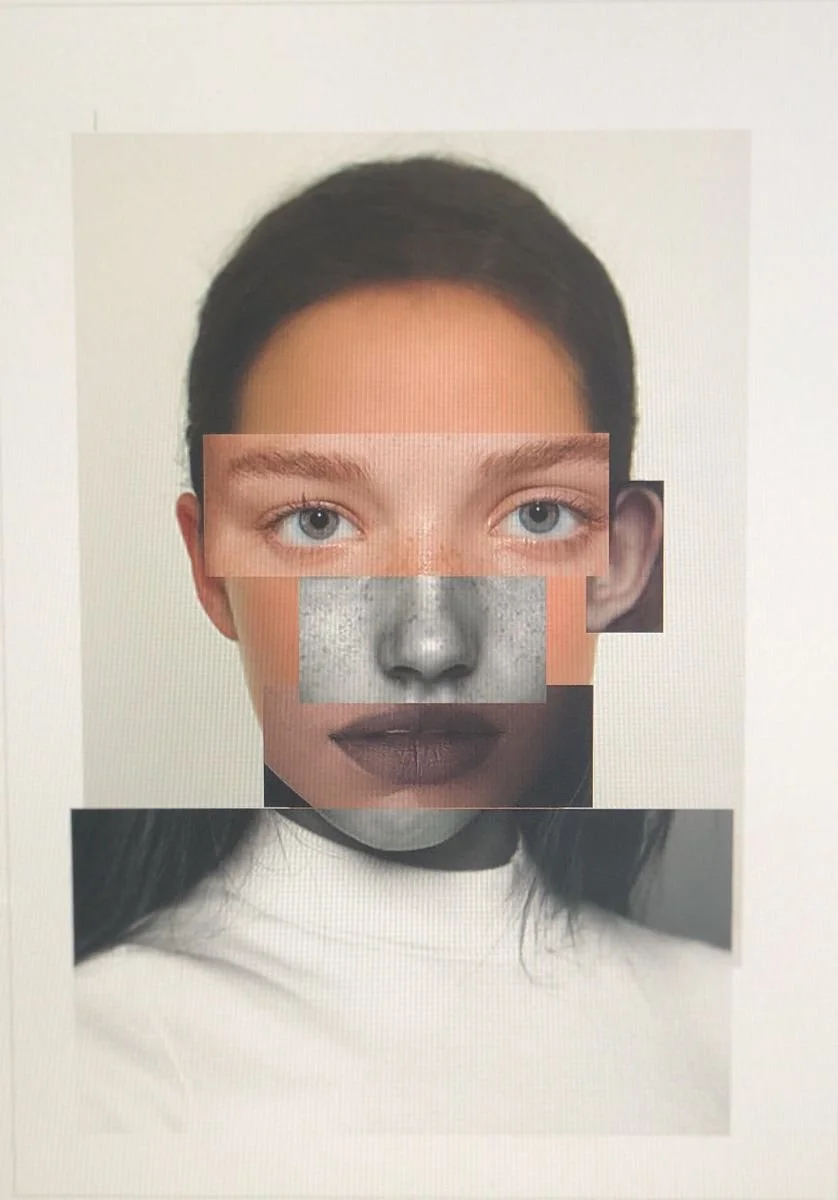
1.5 and second-generation individuals often navigate dual cultural identities
Many feel a lack of full belonging to either culture
Strong connection to heritage is maintained through social environments and cultural practices
IT ALL STARTED WITH A QUESTION AND CURIOSITY ABOUT THE TOPIC OF GIFT-GIVING IN CHINESE CULTURE
Gift-Giving as Cultural Preservation
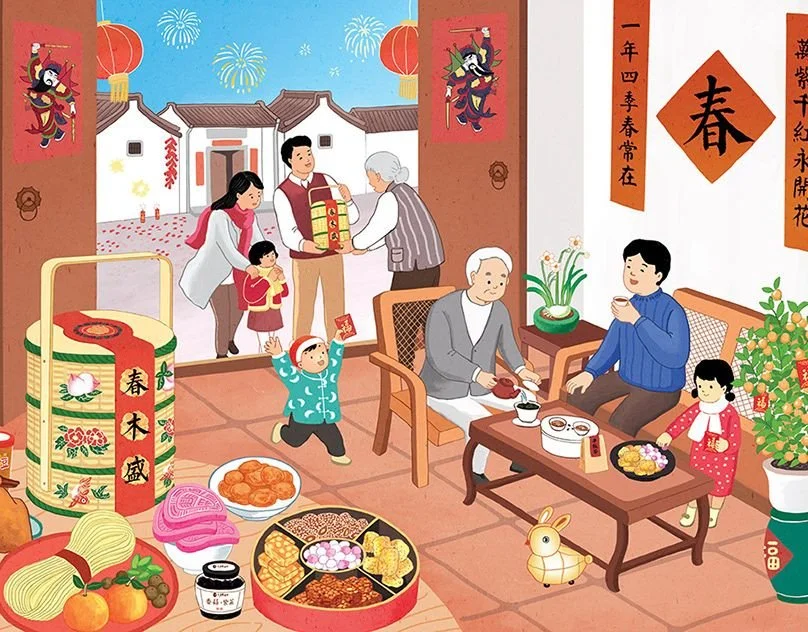
In many cultures, gift-giving is essential to maintaining identity and community survival
It reinforces shared values across generations
-
Gift-giving is a way people connect with each other, not simply the buying, giving, or exchanging of things.
-
People find a sense of belonging through their experiences, not only through their heritage.
-
Design can help connect different cultures and generations. Modernization can help reinterpret tradition, not erase it
WHAT DOES THIS REALLY MEAN?
SO WHAT MOMENT?
Scroll down for the design process
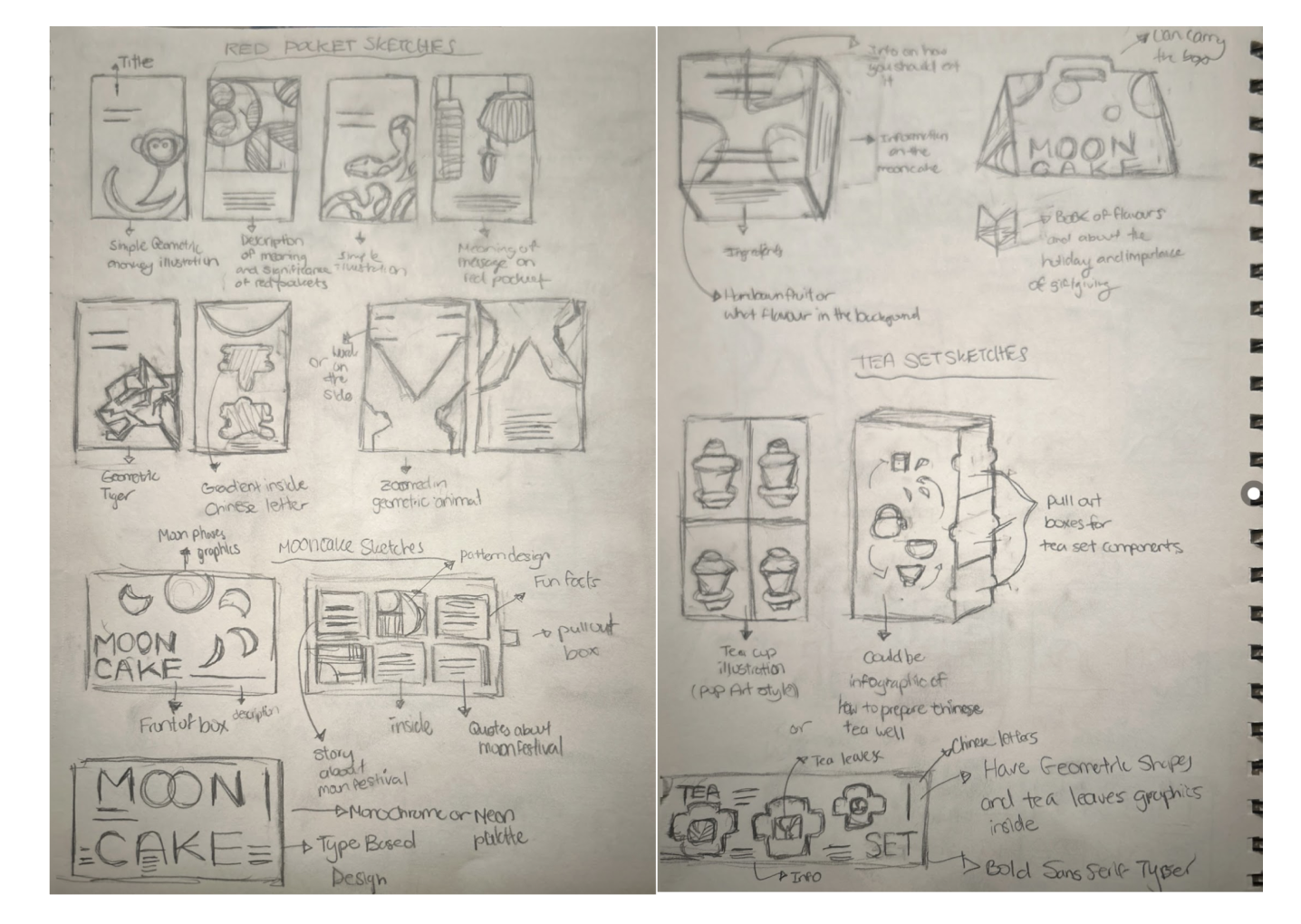
INITIAL SKETCHES
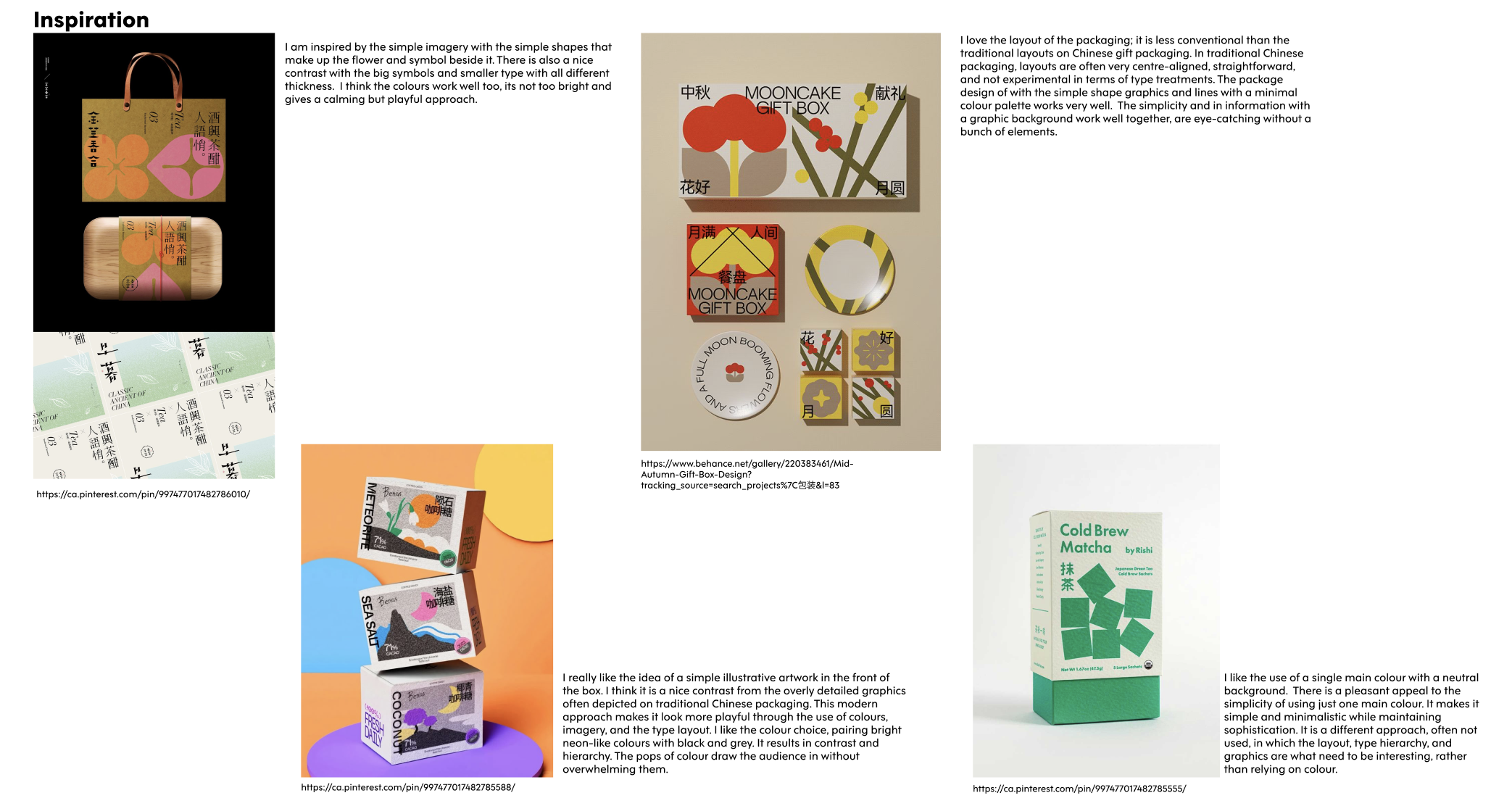
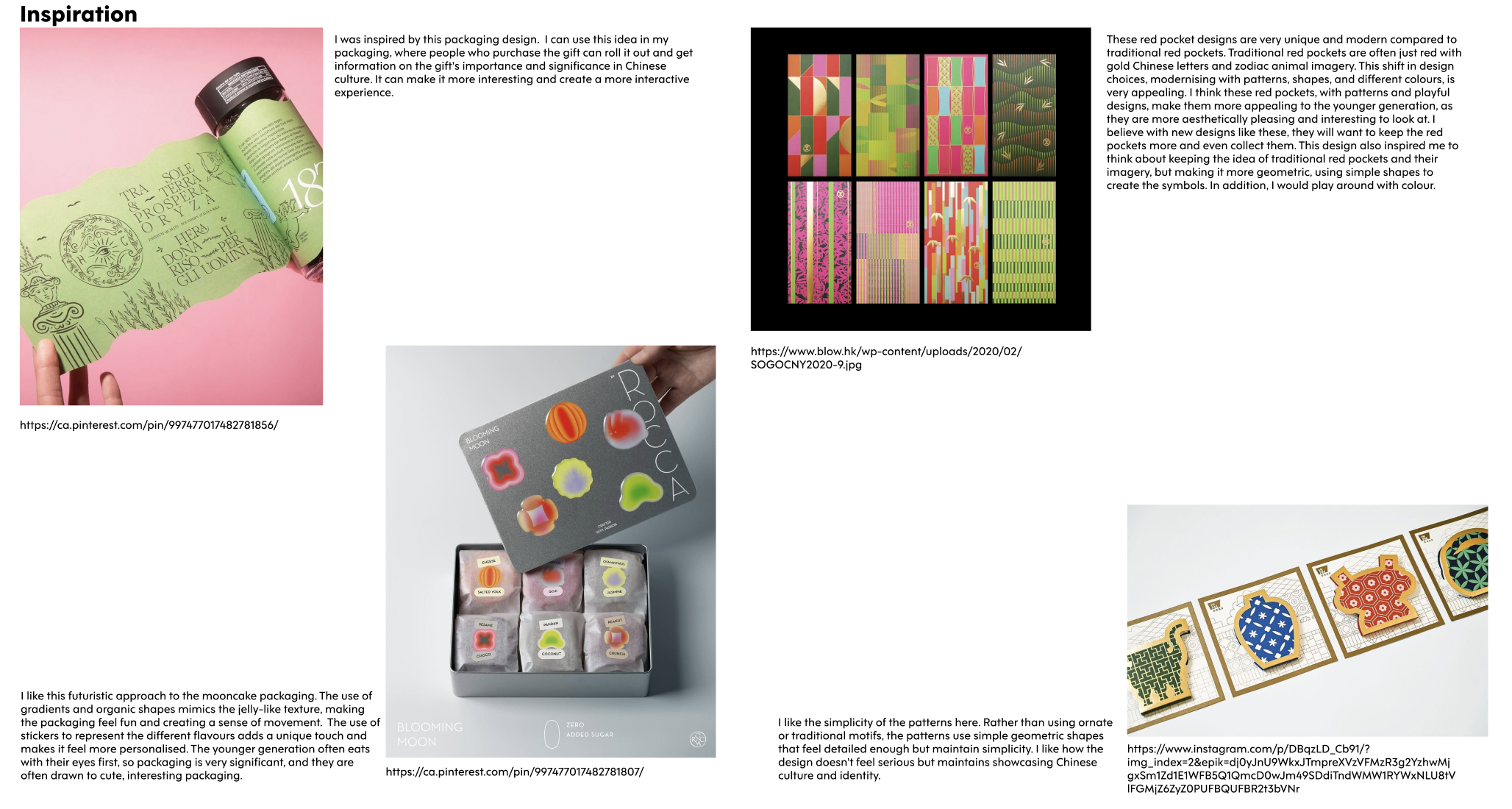
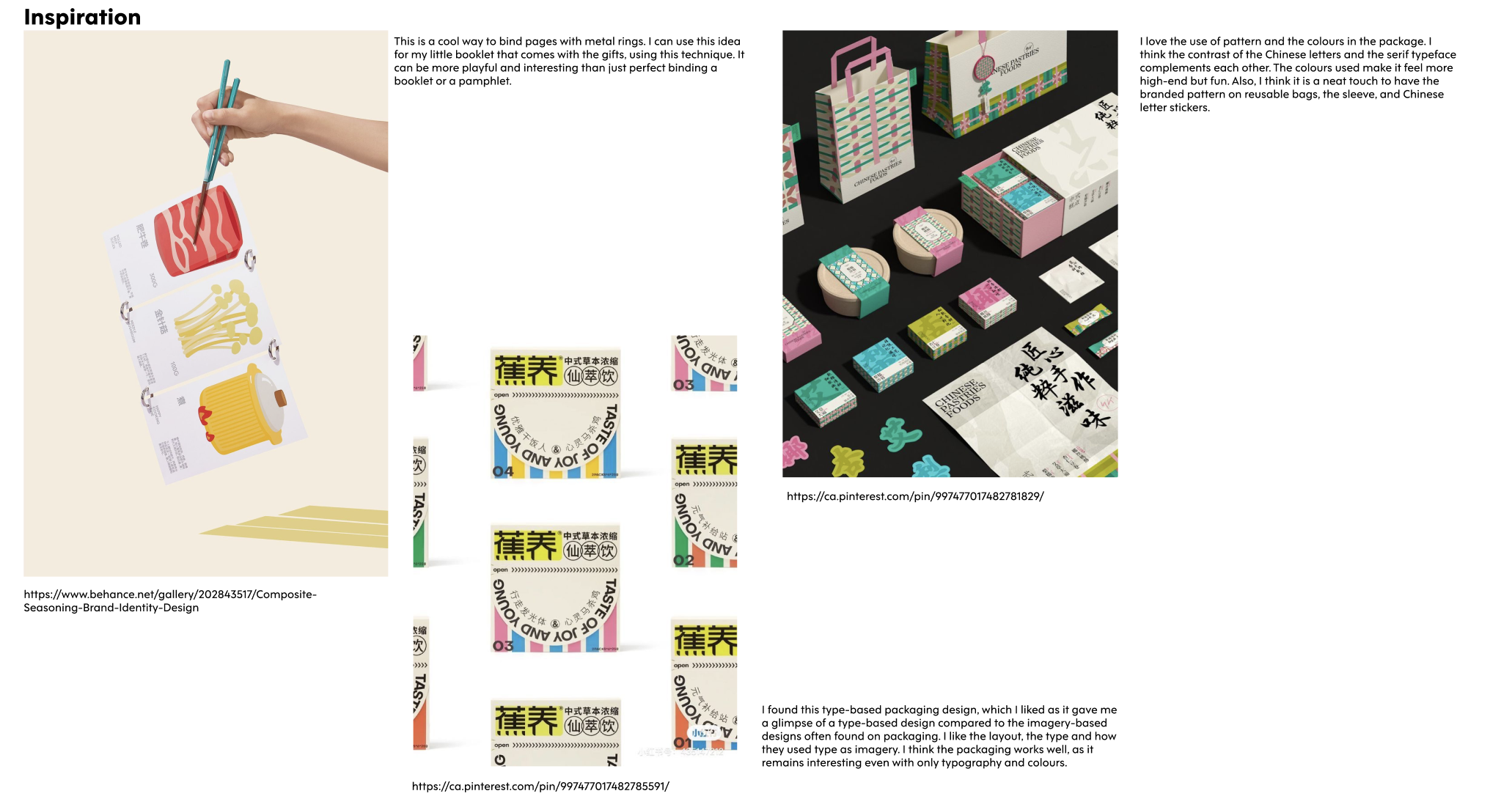
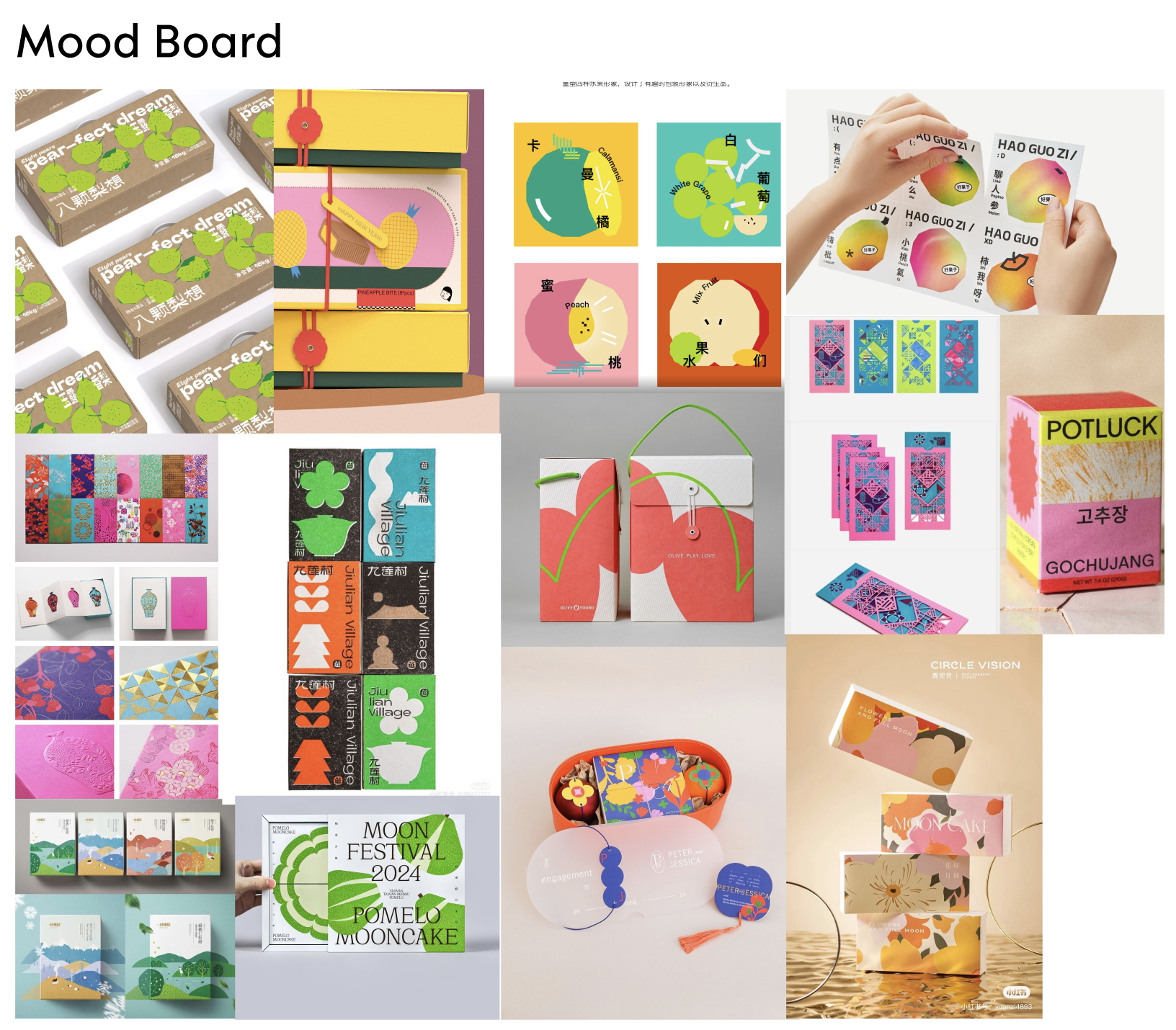
PACKAGING INSPIRATION BREAKDOWN
It’s not the gift, but the meaning behind it
〰️
It’s not the gift, but the meaning behind it 〰️
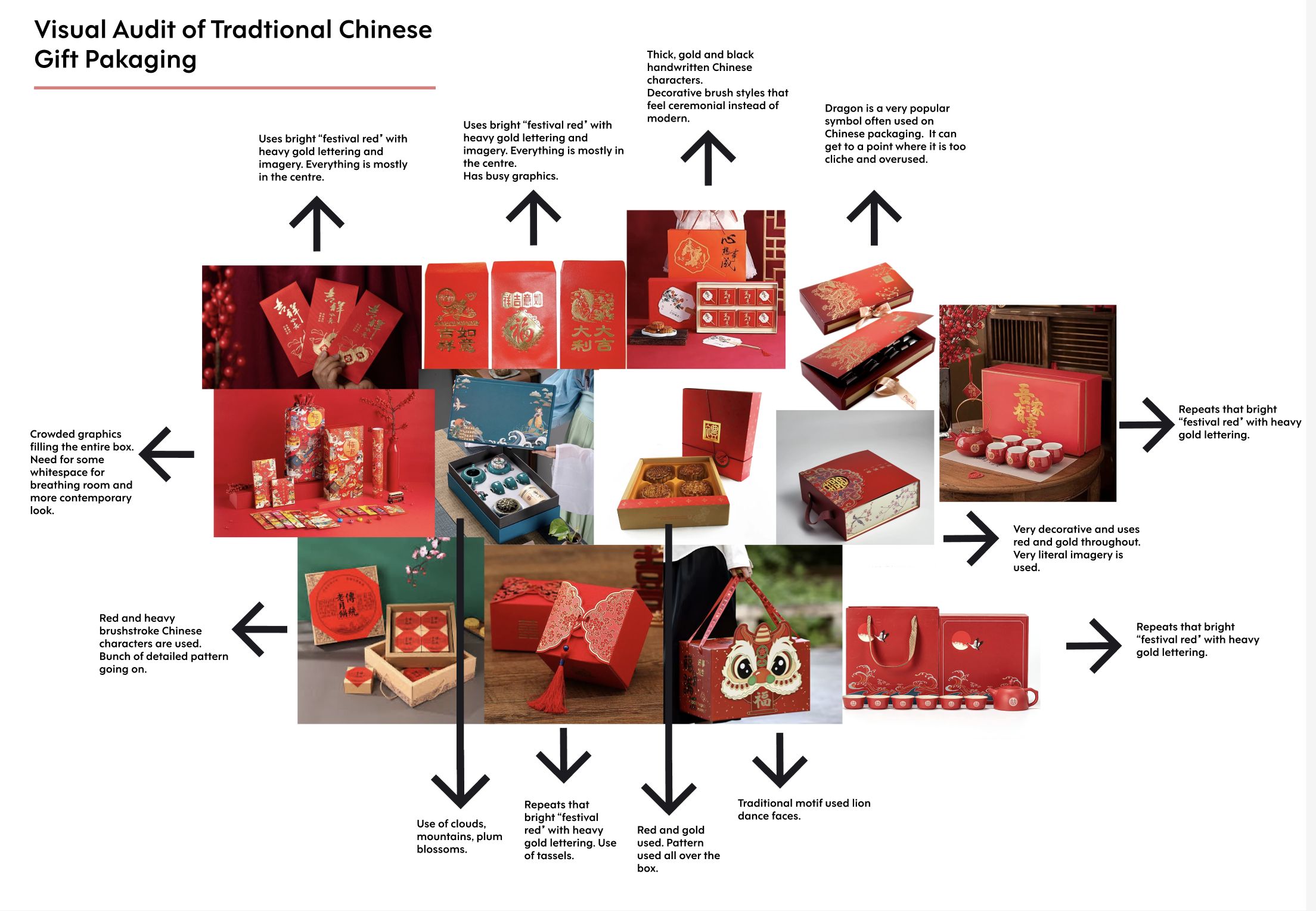
Visual AUDIT
The visual audit is where I analyzed traditional Chinese gifts to identify recurring patterns, symbols, and motifs. This process helped me understand which traditional elements to preserve and which aspects to avoid, guiding the development of my packaging.
IN THE LAB
THE DESIGN JOURNEY
WHERE TRADTION MEETS TODAY
-
![]()
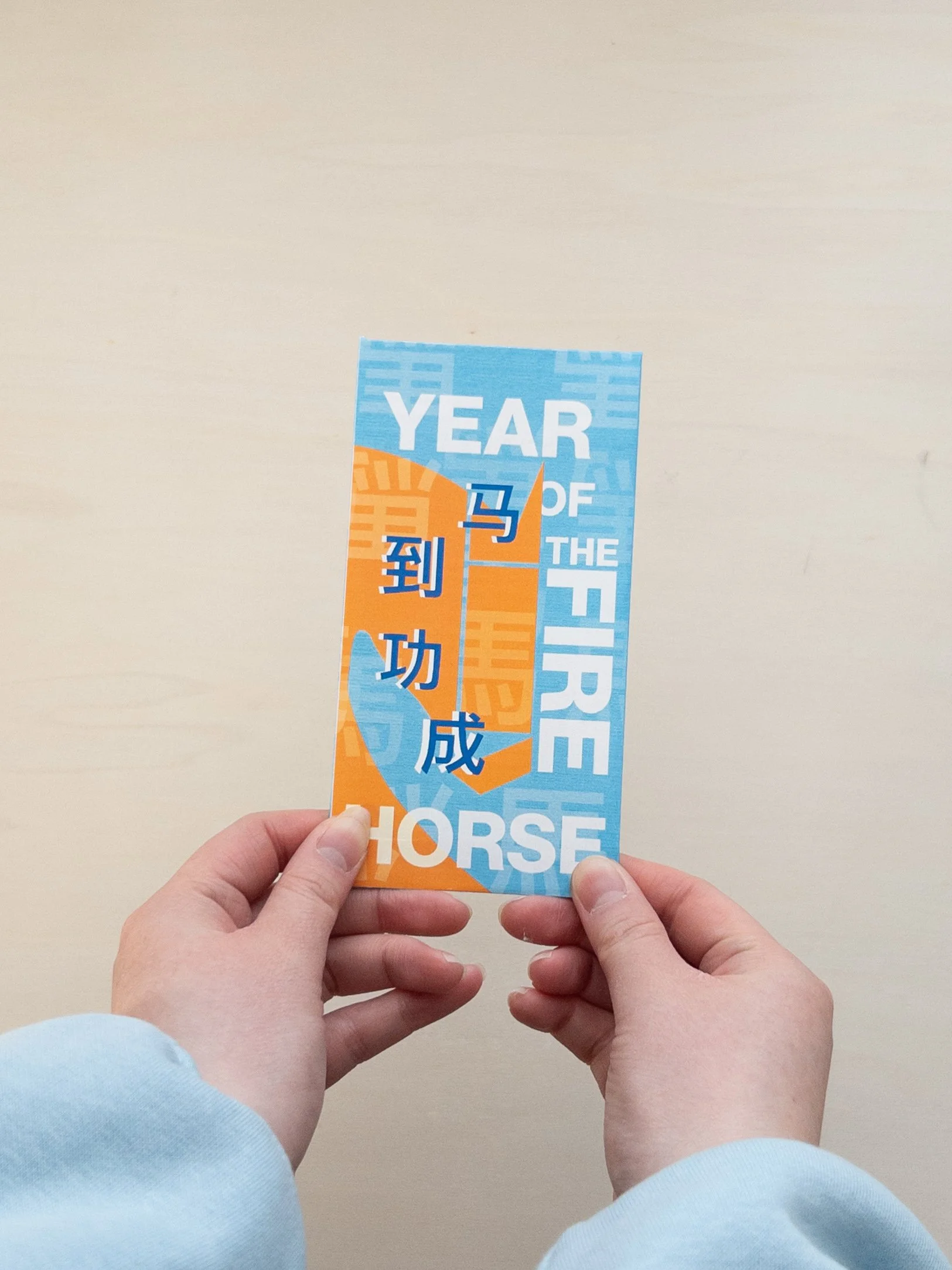
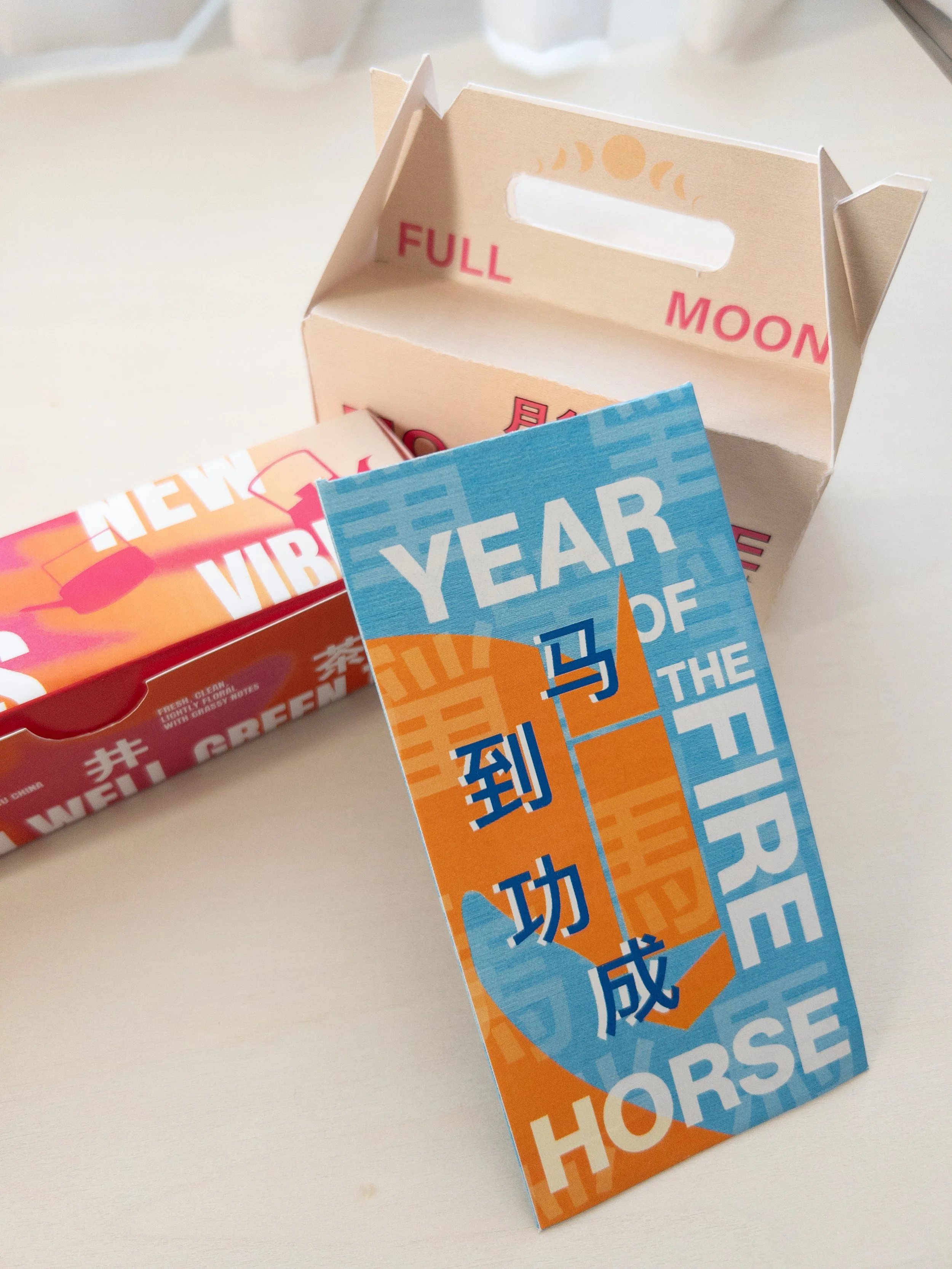
RED POCKET
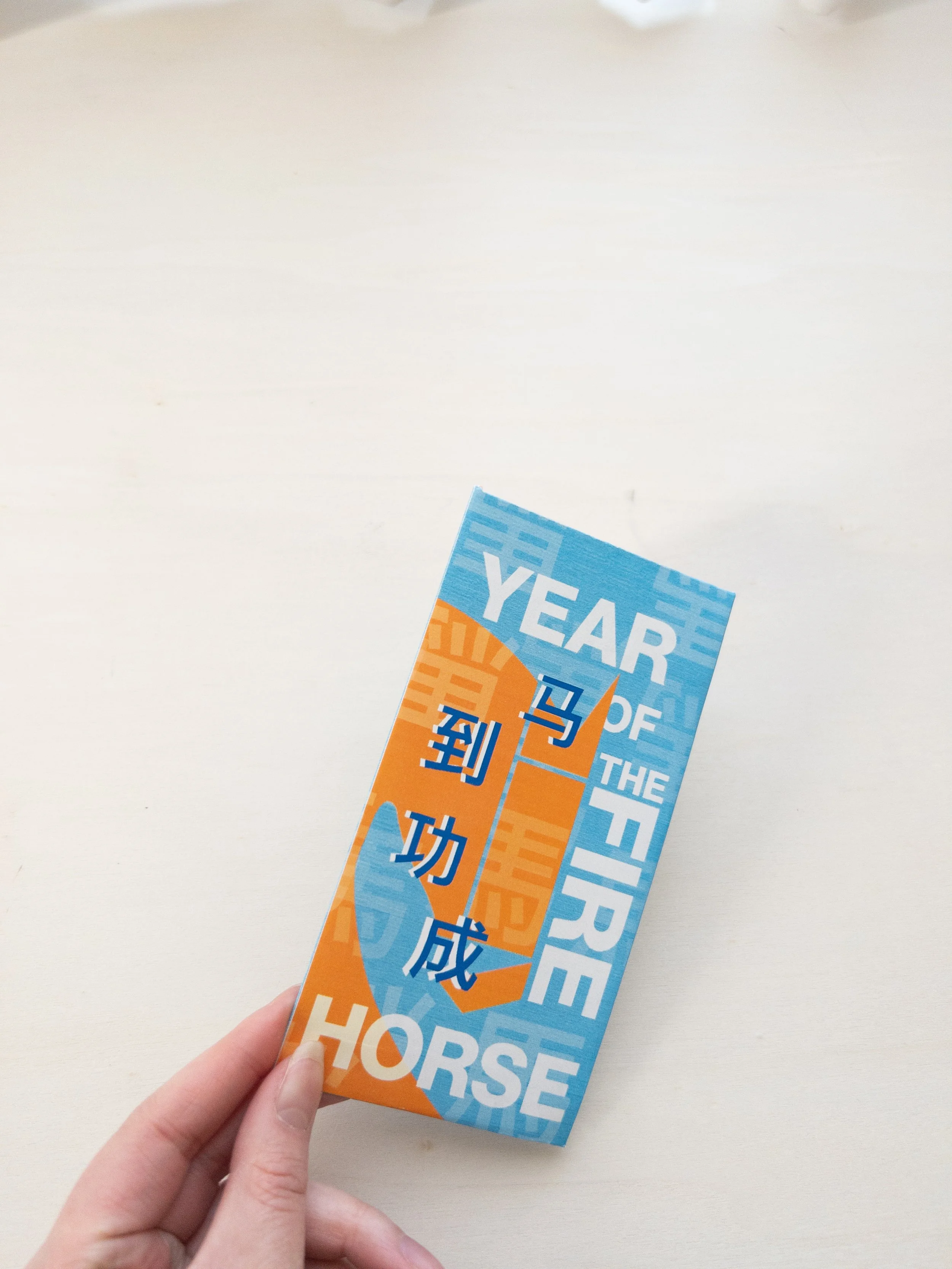
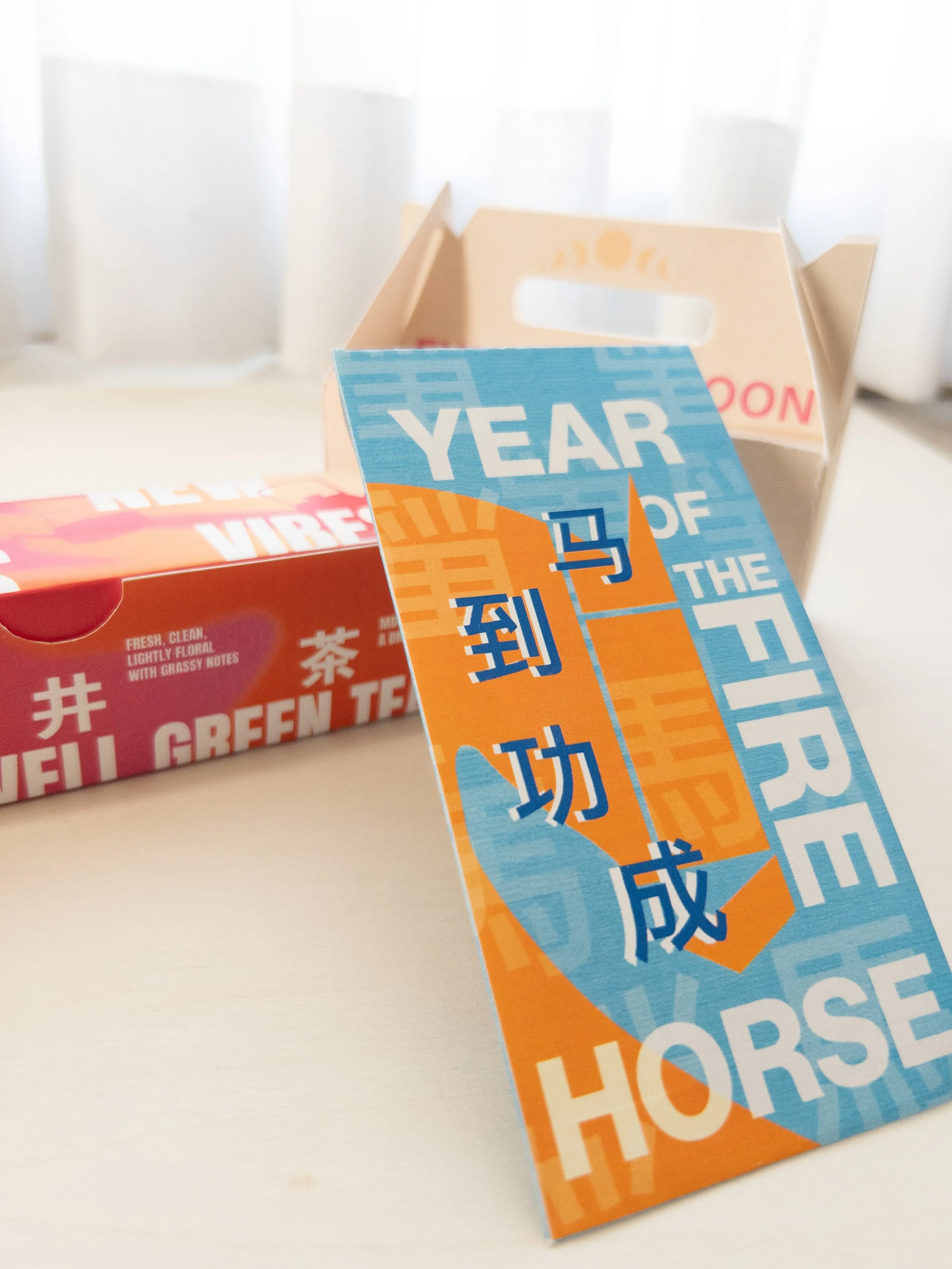
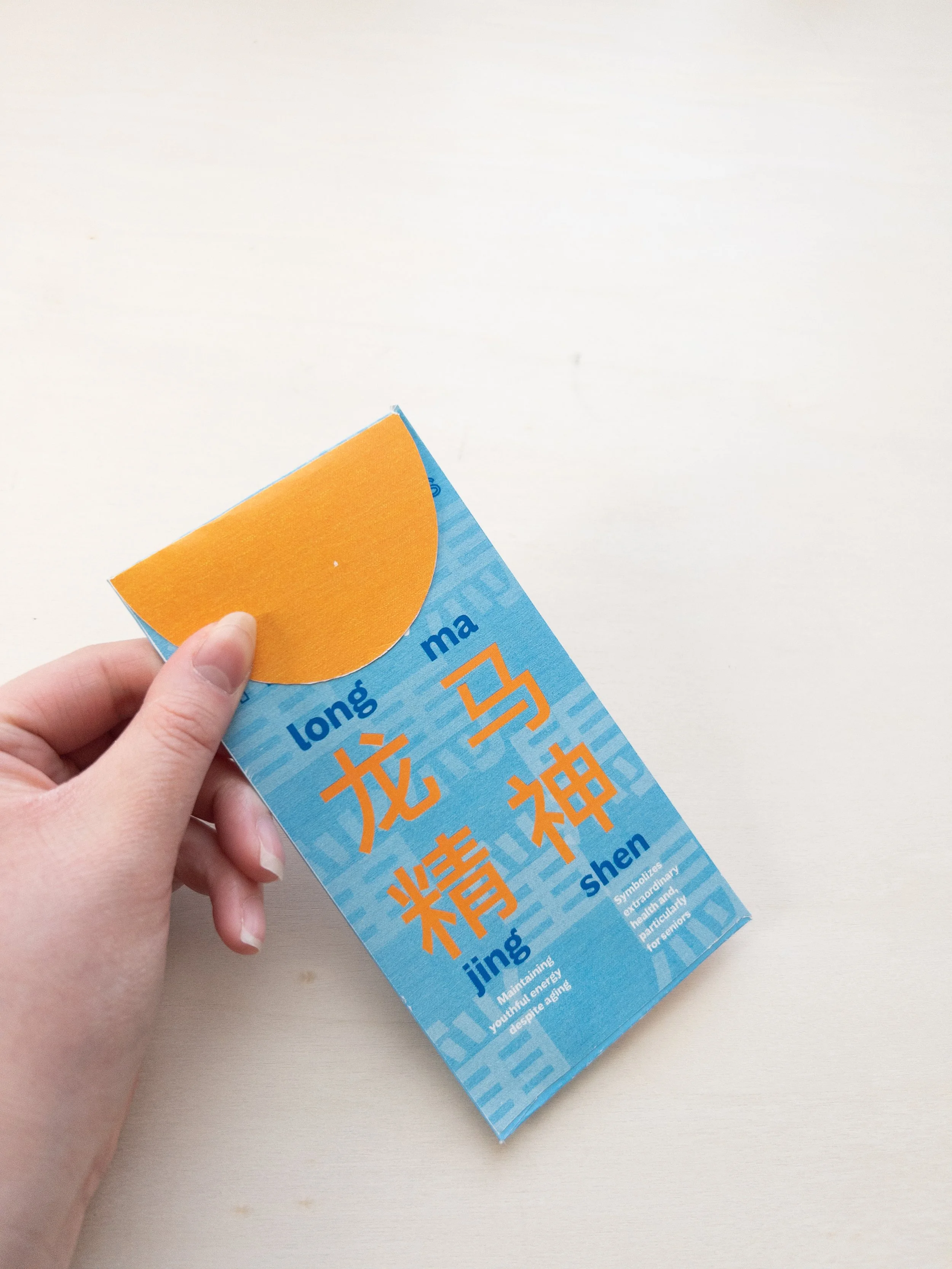
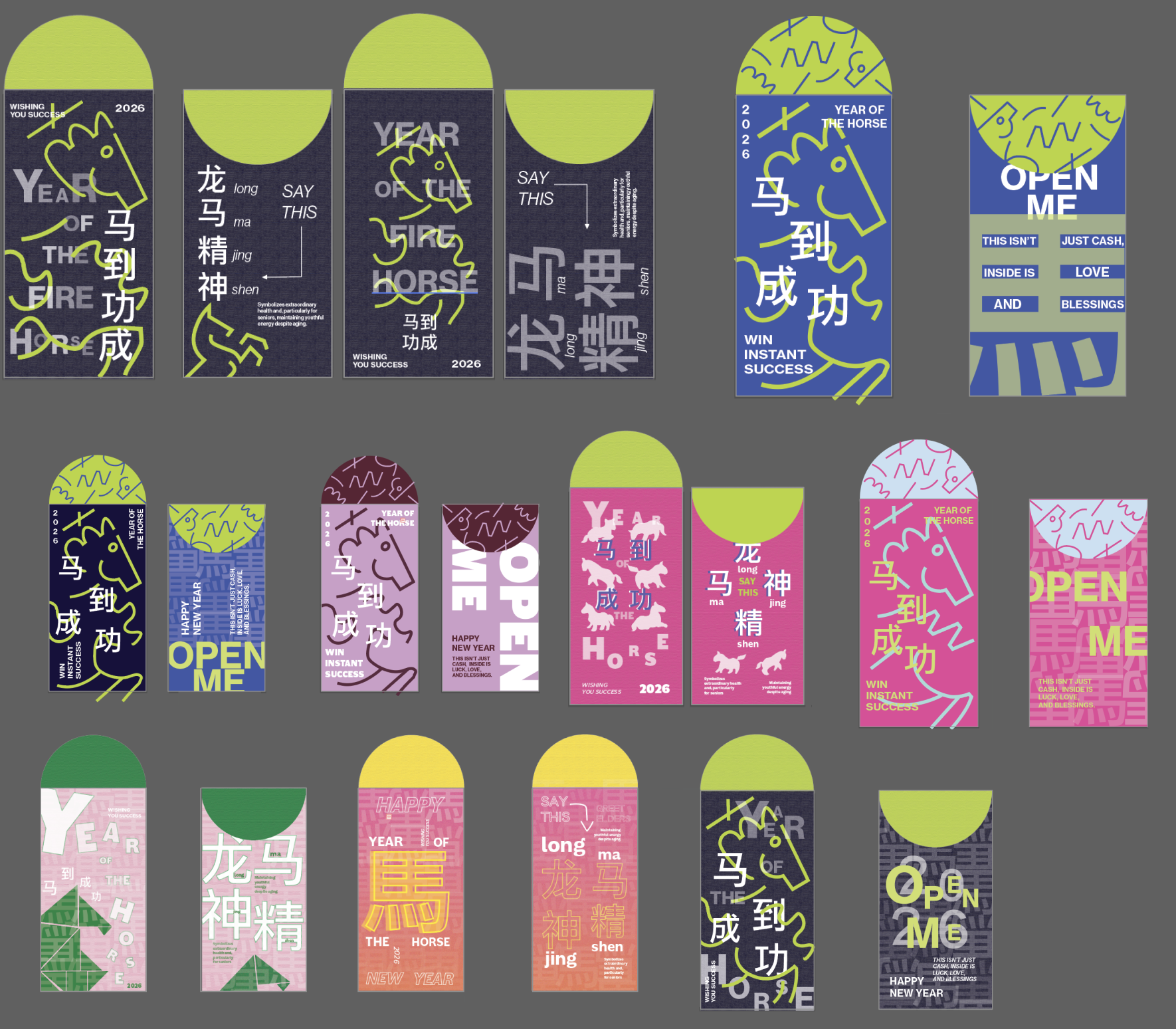
This redesigned red envelope for the Year of the Horse (2026) reimagines a traditional form through a bold, contemporary lens. The design explores a vibrant colour palette of deep blue and warm orange-yellow, challenging the conventional use of red while maintaining a sense of celebration and cultural relevance.
Through the use of scale, layering, and contrast, the composition feels dynamic and visually engaging. The reverse side functions as an educational element, guiding younger audiences on appropriate phrases and the cultural significance of giving red envelopes—bridging tradition with accessibility for a new generation.
-
![]()
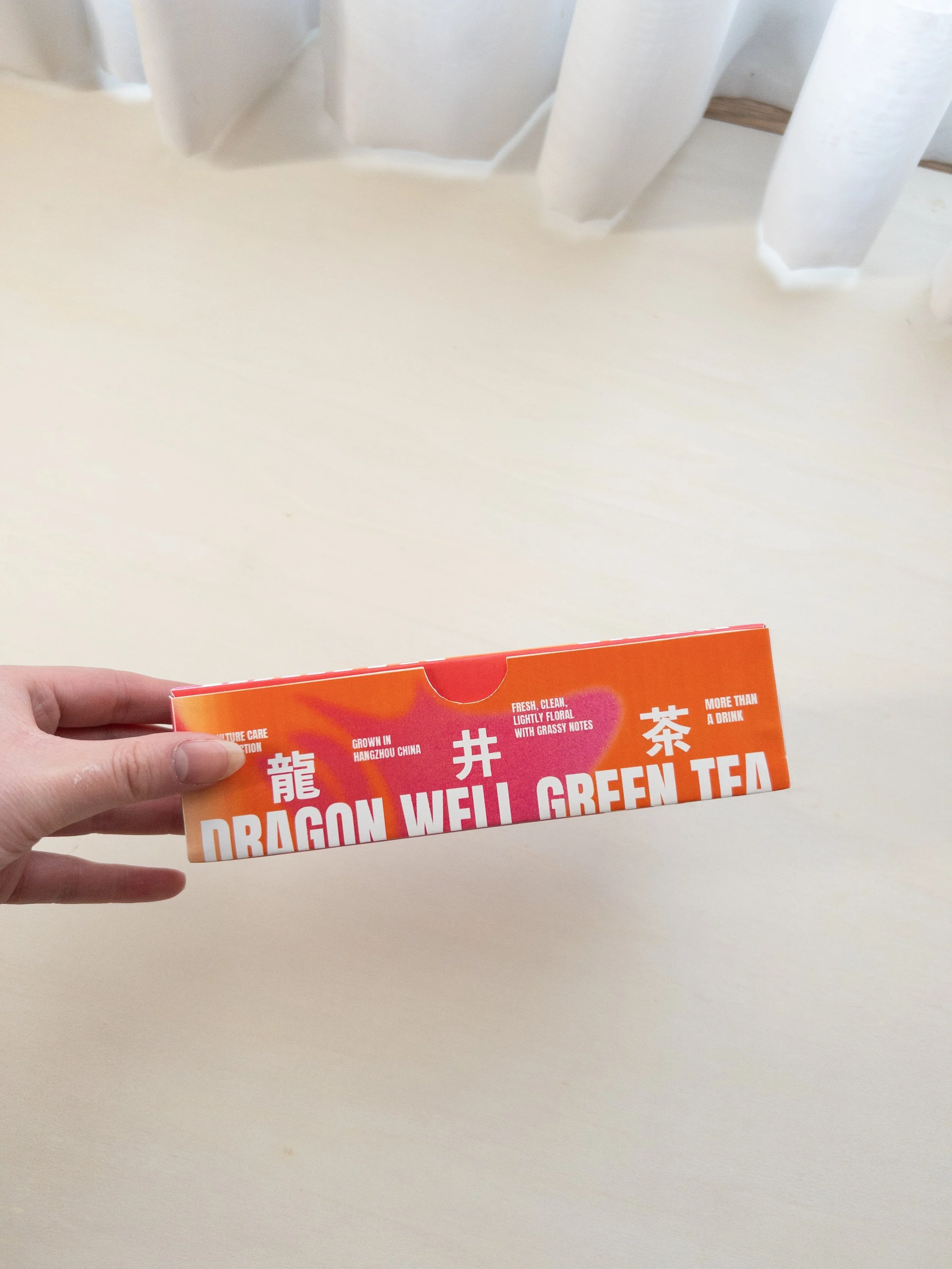
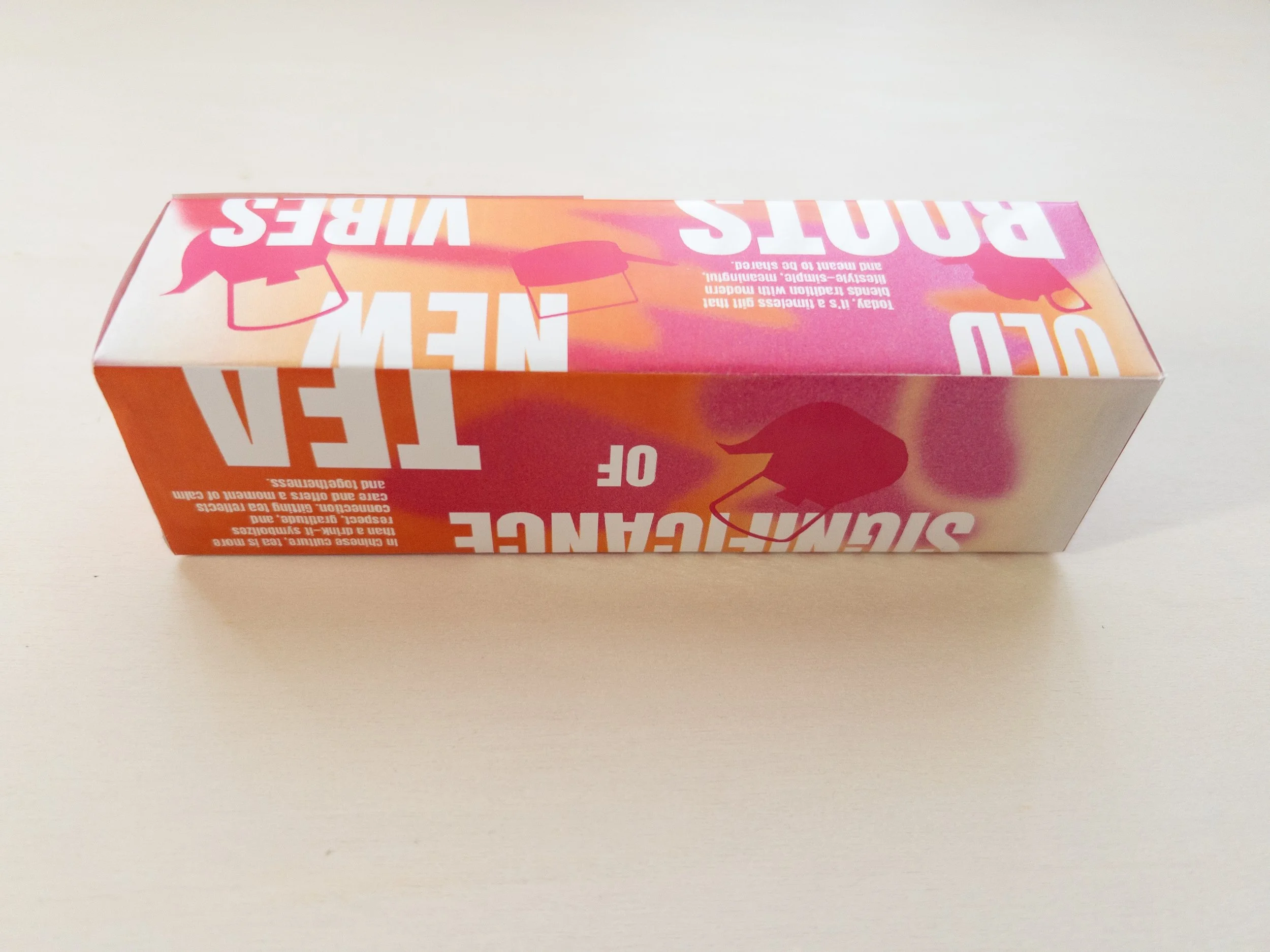
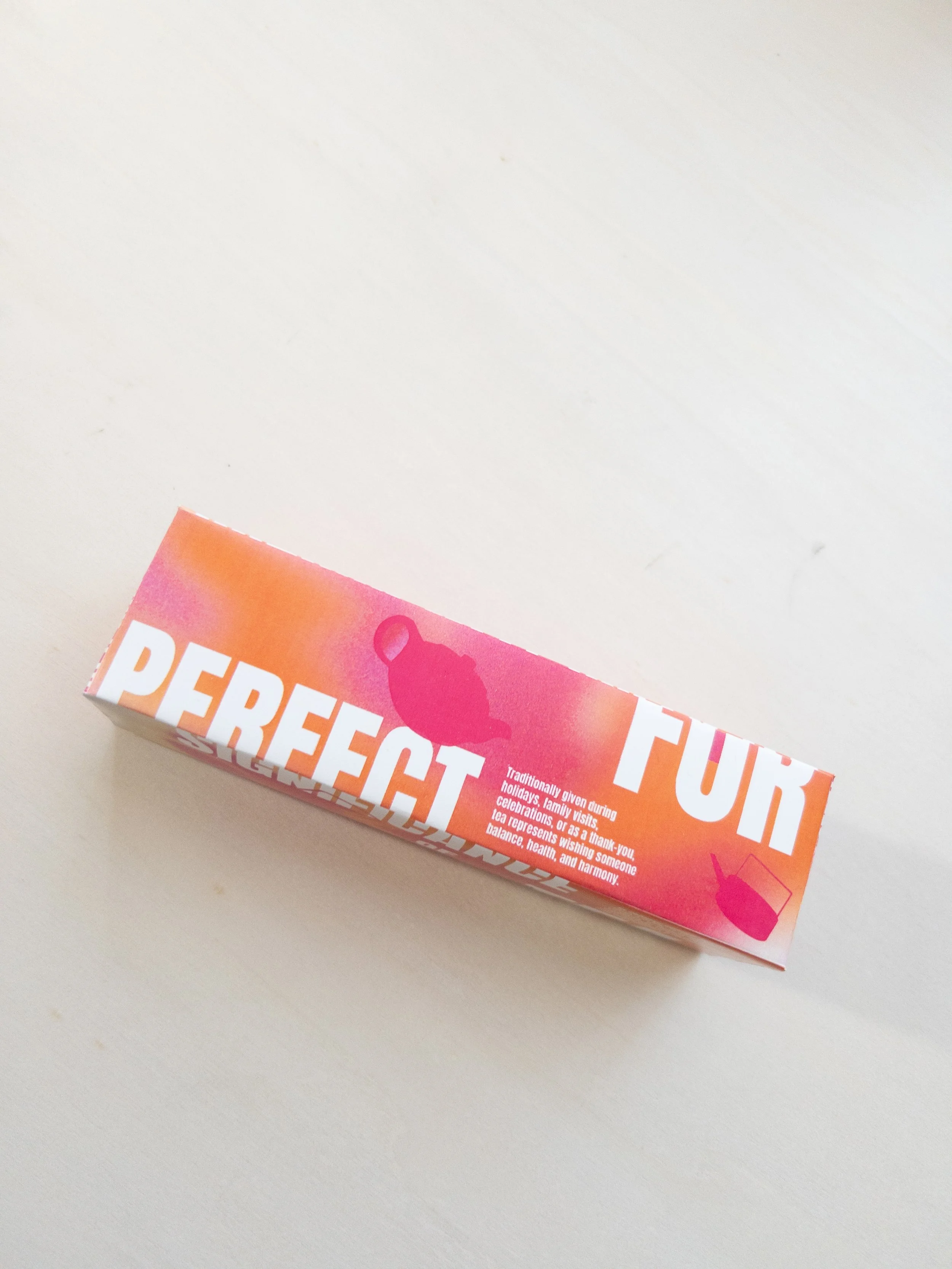
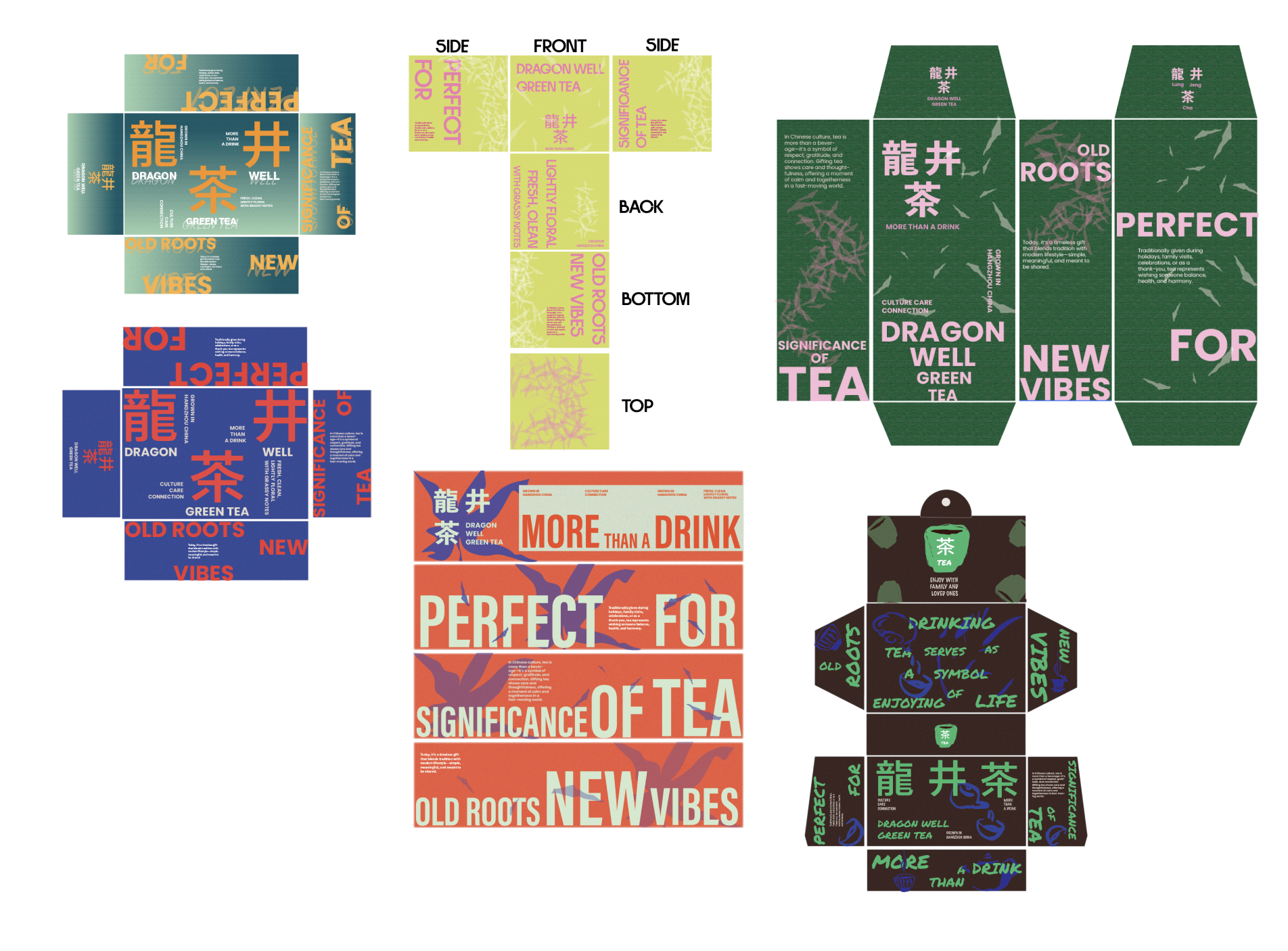
DRAGON WELL GREEN TEA
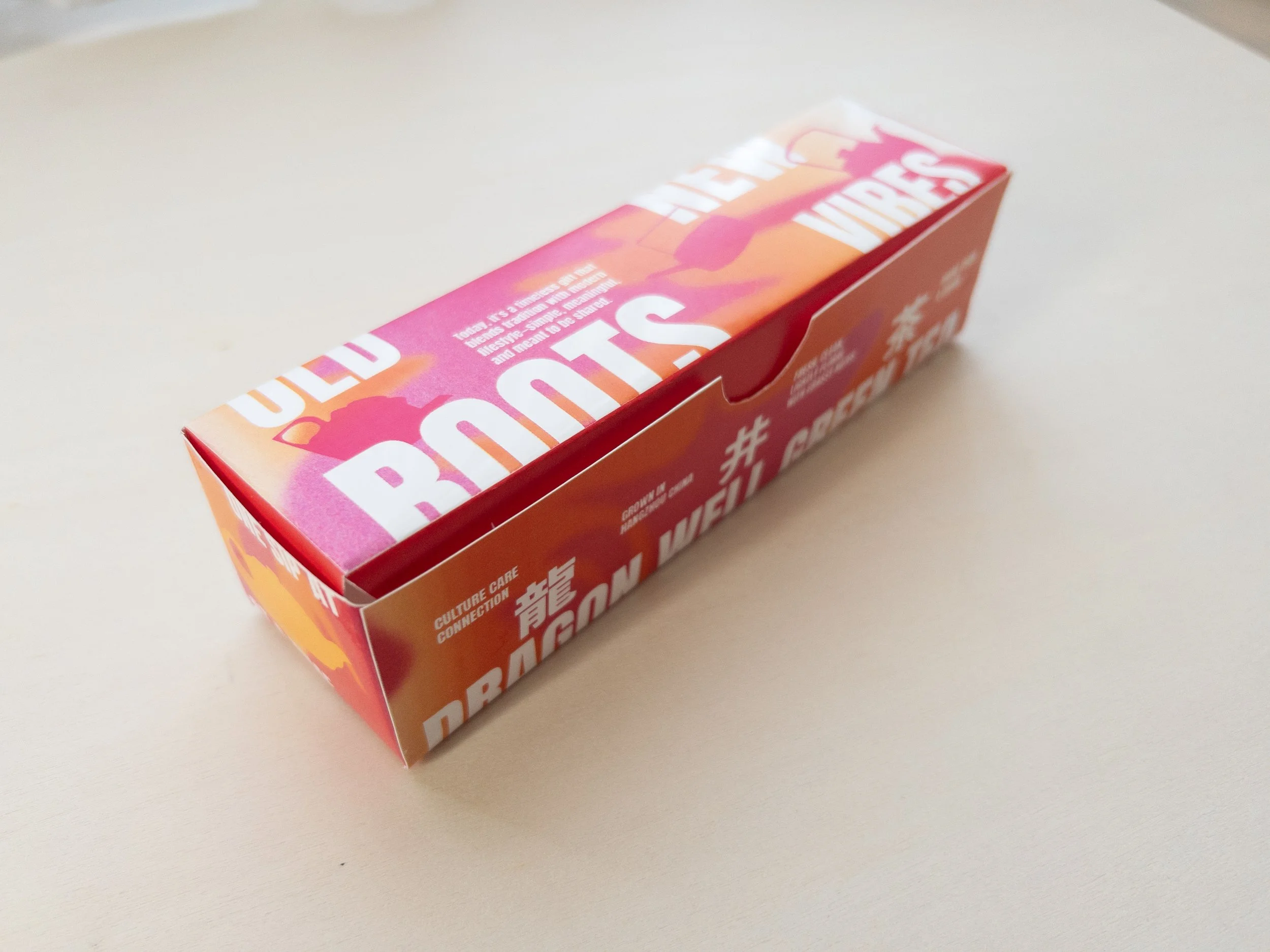
This tea packaging design centers around the idea of atmosphere and sensory experience. Soft gradients are used to evoke abstract mist, referencing the natural environment in which Dragon Well tea is traditionally grown.
The visual system balances large and small typography to create contrast and hierarchy, while cropped and offset text introduces a modern, editorial feel. The result is a refined yet contemporary interpretation that connects tradition with a more minimal, design-forward aesthetic.
-
![]()
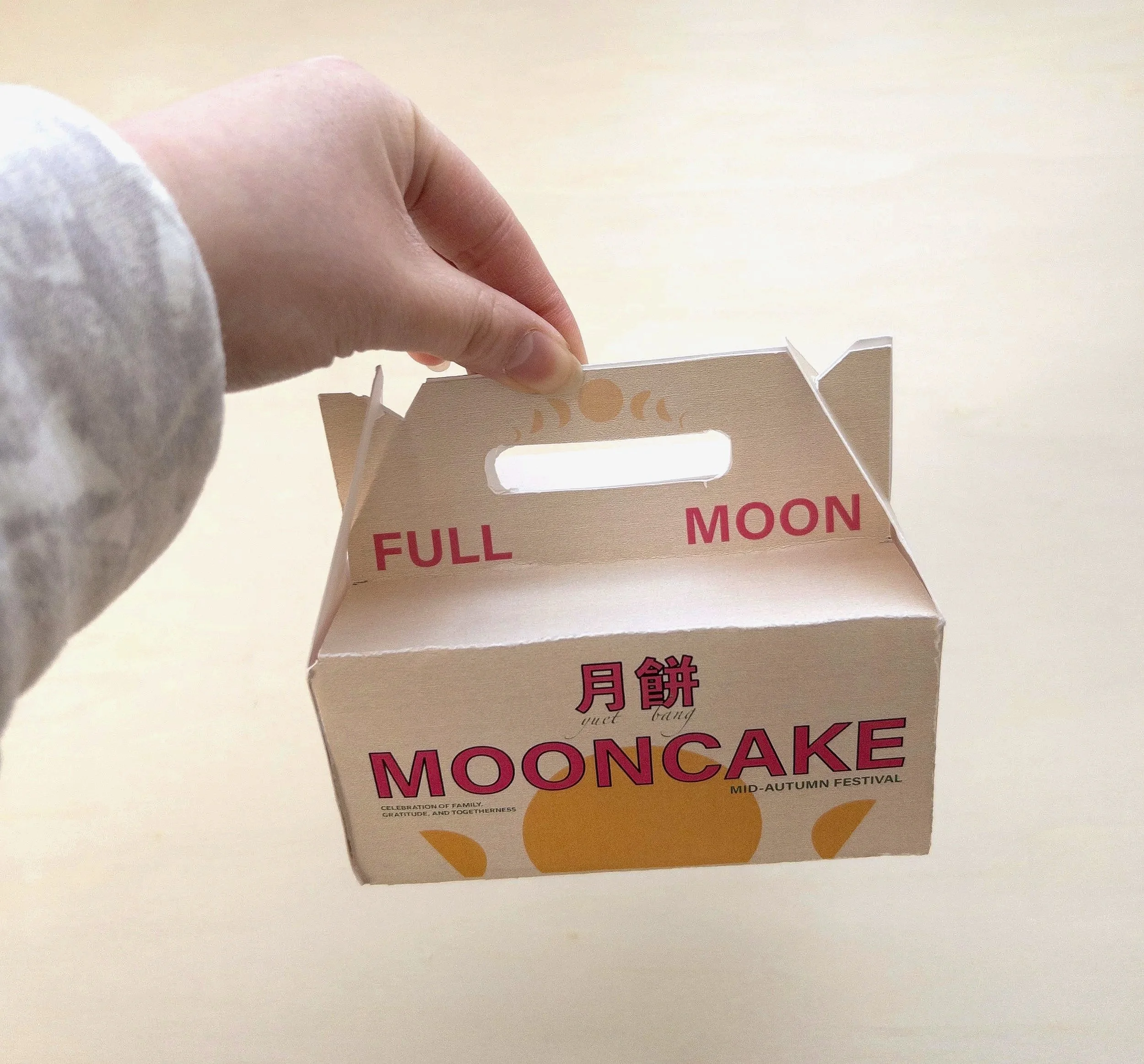
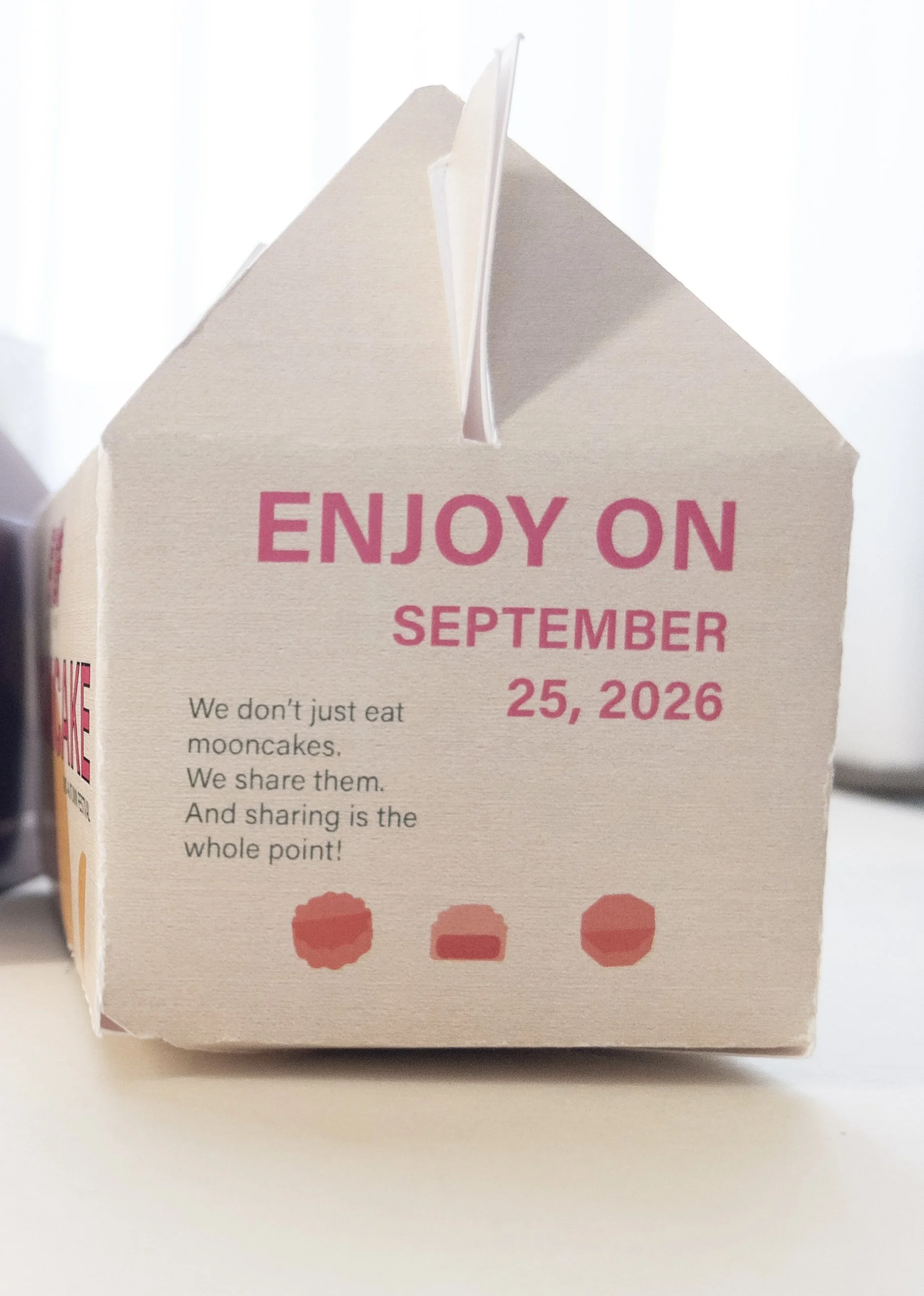
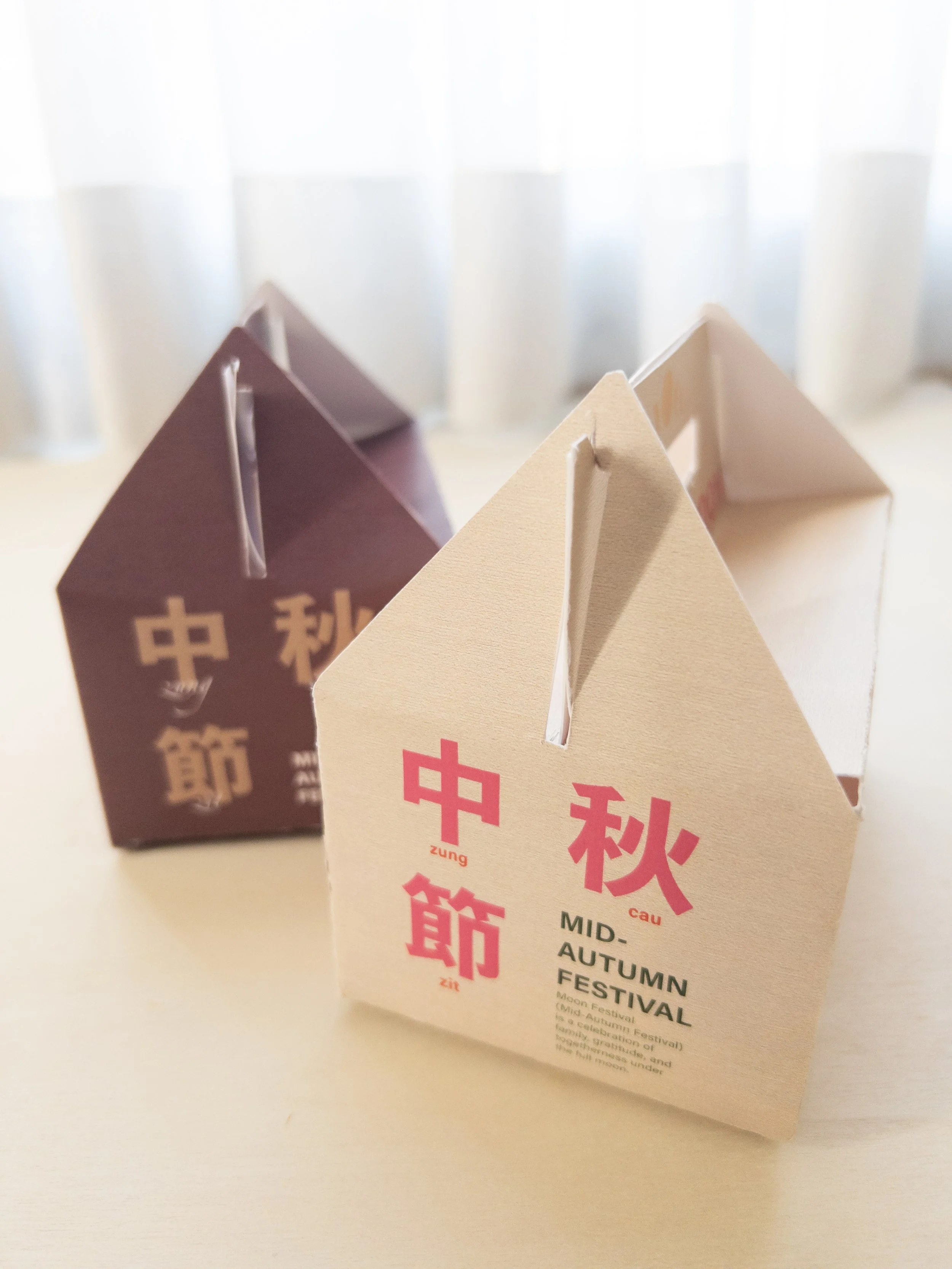
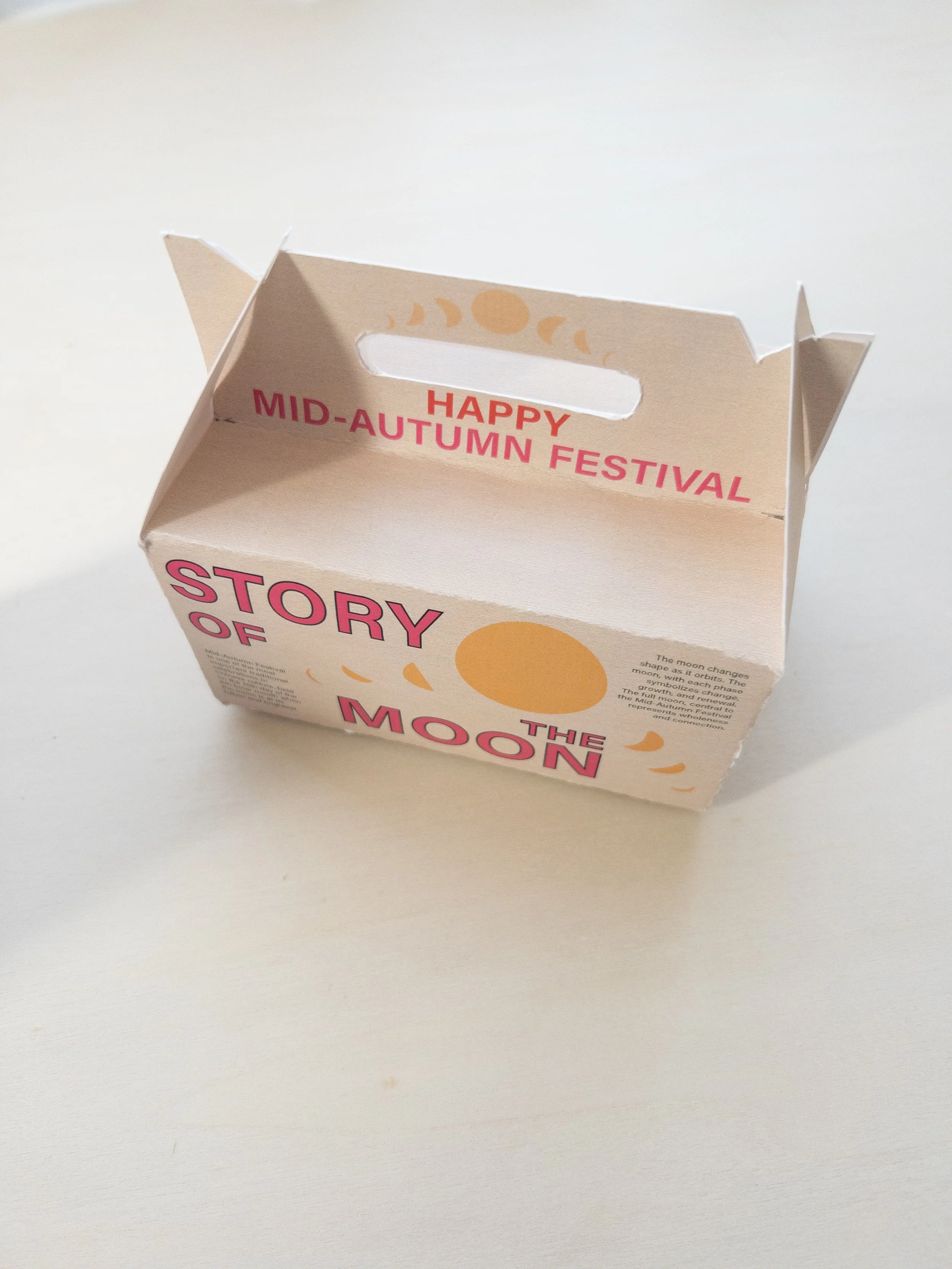
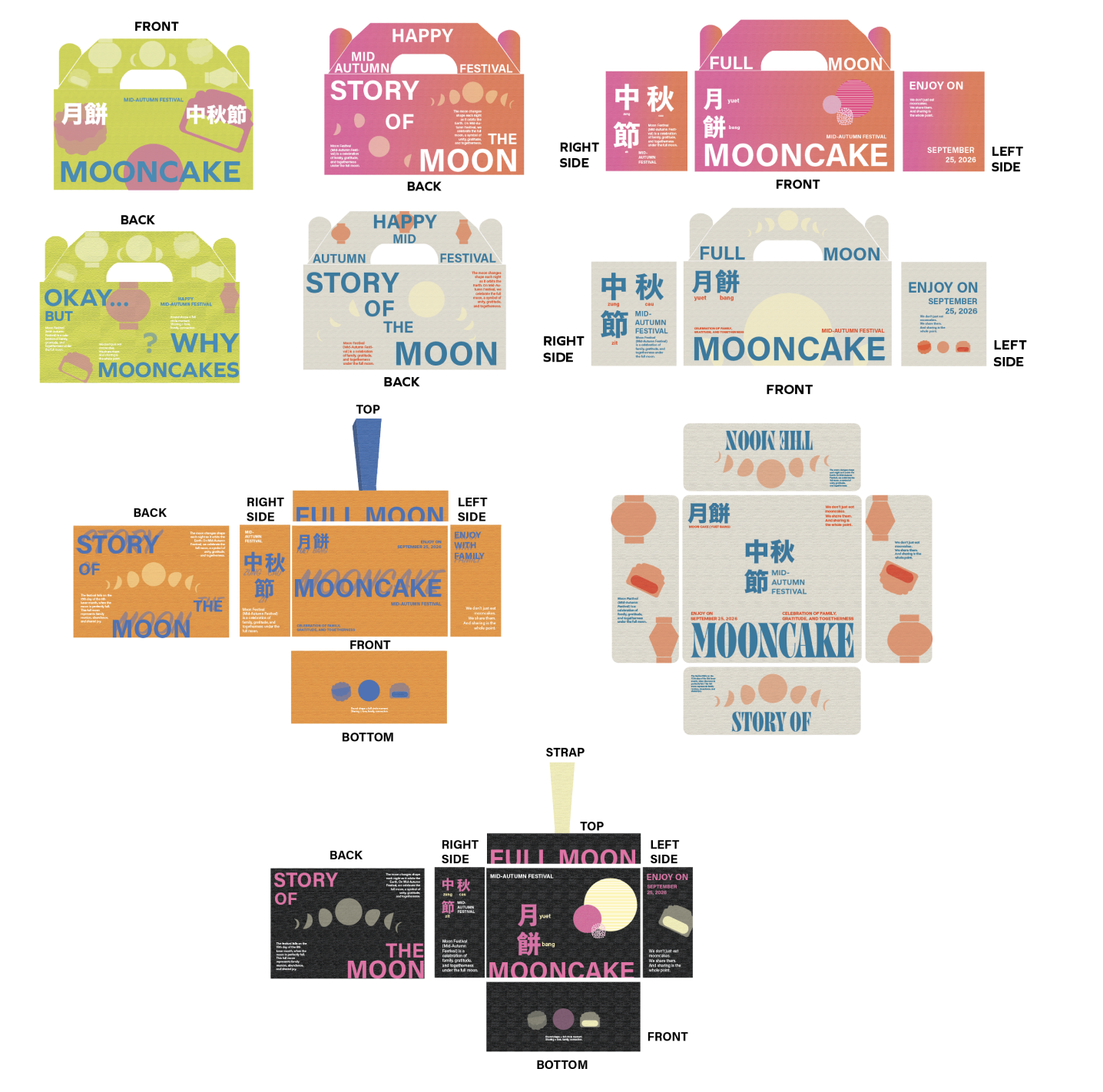
MOONCAKE
This mooncake packaging explores a softer, more playful reinterpretation of Mid-Autumn Festival traditions. The selected color palette introduces a subtle retro influence, creating a look that feels both nostalgic and inviting.
The design combines handwritten and sans-serif typefaces through layering, adding warmth and personality while maintaining clarity. Storytelling plays a central role, with the packaging incorporating narrative elements about the Mid-Autumn Festival and the cultural importance of mooncakes, transforming the package into both an object and an experience.
-
![]()
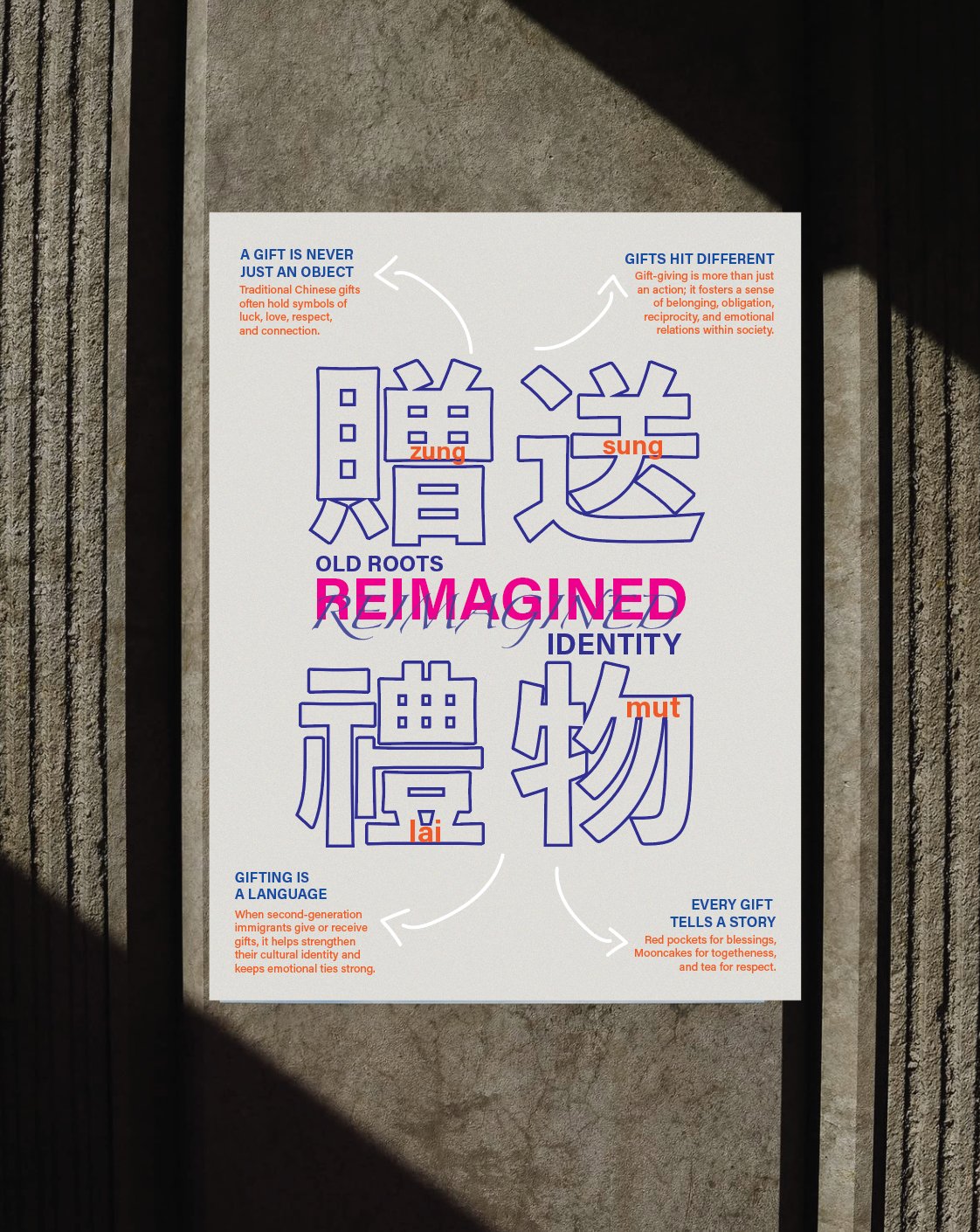
INformative poster
This poster presents the project's main ideas and shows how gift-giving shapes cultural identity.
It shows that giving gifts is more than just exchanging things. These traditions help keep social ties strong, preserve cultural heritage, and create a sense of belonging, especially for second-generation individuals balancing between different cultures.